By Linda Wolfla-Thomas
Vision problems can sneak up on you. Over time, you notice that the PowerPoint presentations are a little blurry, or you have to squint to read smaller print, or you end the workday with a roaring headache.
And these vision problems can affect your work performance.
What you need to know: Most vision problems can be corrected, and that starts with getting eye exams every 1 to 2 years for adults (and whenever you experience vision issues).
But how do you know if you have a vision problem? Let’s take a look at common vision issues, their symptoms, and how they impact jobs.
Common Vision Problems
Nearsightedness (myopia)
You may be nearsighted if distant objects look blurry. It happens when your eyeball is too long, or your cornea is too curved, so light focuses in front of your retina. Myopia can be genetic: If one or both of your parents are nearsighted, you may be, too. Myopia can be corrected with glasses, contact lenses, or procedures like LASIK.
Farsightedness (hyperopia)
You may be farsighted if you see perfectly well at a distance, but up-close tasks look blurry, or cause eye strain or headaches. It happens because your eyeball is too short or your cornea is too flat, so light focuses behind your retina. It, too, can be corrected with glasses, contact lenses, or procedures like LASIK.
Astigmatism
You may have astigmatism if things look blurry at any distance, if you have to squint to see clearly, or if you don’t see well at night. With astigmatism, your cornea or lens has an irregular shape, so light doesn’t fall evenly on the retina. It can be corrected with glasses, contact lenses, or procedures like LASIK or photorefractive keratectomy (PRK)
Presbyopia
You may have presbyopia if you’re 40 or older, and hold reading material at a distance, or don’t see well in dim light. Why? The lens inside your eye thickens and loses its elasticity, so light doesn’t focus correctly on the retina. It’s corrected with glasses (“readers” or prescription lenses), contacts, or eye surgery.
Digital Eye Strain/Computer Vision Syndrome
You may have digital eye strain if you have eye irritation, blurry vision, or light sensitivity after using a computer, tablet, or smartphone. Why? You don’t blink as often. You’re constantly focusing and refocusing. There’s glare from lights and windows. Your doctor may suggest eye drops for irritation or prescribe glasses specifically for computer use.
What you can do: Position your screen about 20 to 24 inches from your eyes, with the center about 4-5 inches below your eye level. Adjust screen brightness, and use a screen filter for overhead lights. Most of all, take breaks. Rest your eyes for 15 minutes after 2 hours of work, and every 20 minutes, look into the distance for 20 seconds.
Cataracts
Cataracts, cloudy areas that form on your eye’s lens, are associated with old age. But cataracts can develop in your 40s and 50s, with subtle vision changes showing up in your 60s or later. Reading in low light becomes difficult. You see glare or halos from headlights or develop blurry, shifting vision. If you’re nearsighted, your near vision may improve temporarily.

With regular eye exams at the Rochester Eye & Laser Center, your doctor can monitor the cataracts and prescribe glasses to help you manage the early symptoms.
How Vision Problems Affect Different Types of Work
Vision problems don’t affect every person or their jobs in the same way, but the effects can move through a workplace, bringing lower productivity, increased errors, or safety risks. Here’s how vision problems can show up in different job categories:
Office and Administrative Jobs
Workers with uncorrected vision problems often take longer to read documents, verify data, or complete spreadsheets, which reduces efficiency. Workers can misread numbers and words, or skip lines, leading to mistakes.
If you’re working from home, you may need to improve your lighting for your eye health.
Healthcare
A worker with untreated vision problems may have trouble reading charts or the small print on medication labels, syringes, and IV bags, thus increasing the risk of administering an incorrect dose or misunderstanding instructions. Vision problems can also hinder the depth perception and hand-eye coordination needed for surgery, wound care, or phlebotomy.
Lawn Care and Landscaping Pros
These lawn care and landscaping providers deal with many risks: They operate mowers, trimmers, and other machinery; handle chemicals; and are exposed to UV rays. Vision problems can make it difficult to adhere to yard work safety practices.
Problems reading small print can make it difficult to read instructions and safety warnings on yard-care chemicals. Vision issues that interfere with depth perception can make it difficult to safely operate edgers or trimmers, or maneuver a lawn mower over a rough or sloped lawn.
Jobs That Require Face-to-Face Communication
Teachers, counselors, customer service, and retail workers pick up facial expressions, body language, and other nonverbal cues as part of their jobs. If those cues are missed or misinterpreted, misunderstandings can occur.
Why Workers Put Off Seeking Help for Vision Problems
Making an appointment with an eye doctor is one of those things that we know we should do. But it’s also one of those things that’s easy to put off. Here’s why:
It’s Easy to Rationalize
You blame your tired eyes on the glare from the office lights. That headache at the end of the day? It’s just stress, or maybe it’s allergies. Everyone has a little trouble reading after 40, right? The trouble is, when you finally realize something is wrong, it’s affected your work for a while.
It’s Easy to Adapt
Most vision problems happen slowly and quietly, so without thinking, you adapt: You sit closer to the screen or increase the font size, avoid driving at night if possible, or make a regular stop at the drugstore for eye drops. But, like with rationalization, by the time you can’t ignore the problem, it’s already affected your work and life.
The Cost
If vision coverage isn’t part of your work benefits, paying for an eye exam and new glasses may seem an expense that you should put off. If cost is a problem, know that some employers offer Health Savings Accounts and Flexible Spending Accounts. If you’re eligible, you can contribute pre-tax income to be used for medical expenses – including eye care.
Why You Should Have Regular Eye Exams
A yearly eye exam allows your eye doctor to monitor your vision and eye health over the long term. It can catch and treat early signs of cataracts, glaucoma, and macular degeneration. It can also help detect signs of such issues as diabetes and high blood pressure before symptoms appear elsewhere.
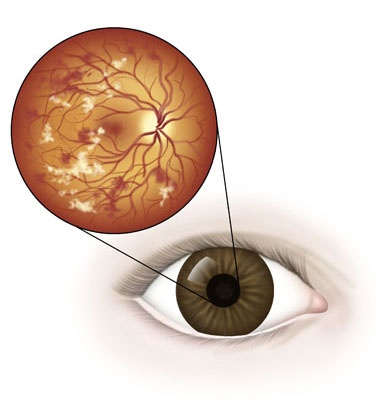
Note: Detecting early signs of diabetes is particularly important. Diabetic retinopathy, which damages blood vessels in the back of the eye, is the leading cause of blindness in working-age American adults. But according to the CDC, more than 90% of diabetes-related vision loss can be avoided with early detection and treatment.
Pay Attention to Your Vision: It’s Worth it
Blurry vision, headaches, problems seeing at a distance or up close are your eyes’ way of telling you that something is wrong. Fortunately, most of the vision problems that affect your work are correctable. So don’t wait: Make your work life easier by scheduling a comprehensive eye exam at Rochester Eye & Laser Center today.
Linda Wolfla-Thomas is a freelance writer and editor who’s learned to pay attention when her eyes remind her that she’s had too much screen time. She often writes about lawn care and home improvement projects.
Photo Source
 Linda Wolfla


 The Rochester Eye & Laser Team : Jun 23, 2022, 3:38:43 PM