 The Rochester Eye & Laser Team
Seeing Past Your Cataract Symptoms
 The Rochester Eye & Laser Team : Oct 25, 2021, 2:34:27 PM
The most common way to eliminate cataracts is to replace your clouded lens with a new artificial one called an intraocular lens, or an IOL.
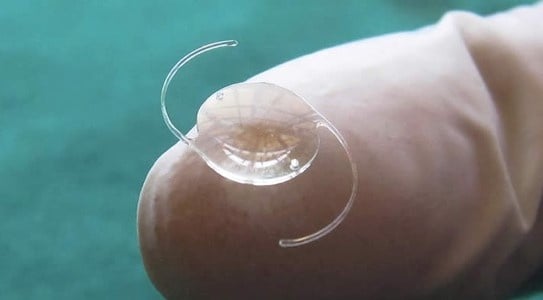
Choosing a lens implant can feel like a lot to take in when you are already preparing for cataract surgery. The good news is that you do not have to make the decision alone. Understanding the main options can help you have a more useful conversation with your eye doctor about how you want to see after surgery.
During cataract surgery, the cloudy natural lens is removed and replaced with a clear artificial lens called an intraocular lens, or IOL. That replacement lens helps focus light in your eye. Different IOLs are designed for different vision needs, and even an advanced lens may not eliminate the need for glasses.
Your eye health, any astigmatism, and the activities that matter most to you all help guide the choice. Here is a plain-language look at the lens types you may hear about.
An aspheric IOL has a carefully shaped curve rather than the same curvature across its entire surface. This design may improve the quality of vision in some situations, including low light, but the benefit depends on your eyes and the particular lens. Ask your surgeon whether an aspheric design makes sense for you.
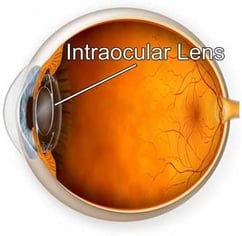 Astigmatism happens when the eye's focusing surfaces are shaped unevenly, making vision blurry or distorted. A toric IOL is designed to help correct certain types of astigmatism during cataract surgery. It must be positioned at a specific angle, so your surgeon will measure your eye and discuss whether it is a good fit. You may still need glasses afterward.
Some lenses are designed to shift slightly within the eye to provide a range of focus. These are called accommodating IOLs. Their near-vision benefit varies, so do not assume they will replace reading glasses. Your surgeon can explain which options are available and what you can realistically expect.
Multifocal IOLs are designed to provide vision at more than one distance. For some patients, that means less reliance on glasses for everyday tasks. They can also cause visual effects such as halos or glare, especially around lights at night. Talking through your driving habits, reading needs, and tolerance for these effects can help you decide whether this type of lens suits you.
There is no single best lens for everyone. Your surgeon will consider measurements of your eyes, your eye health, and what you hope to do without glasses. It helps to come to your appointment with a few questions:
At Rochester Eye & Laser Center, we can talk through your options and help you understand what is appropriate for your eyes. Schedule an eye exam to start the conversation.

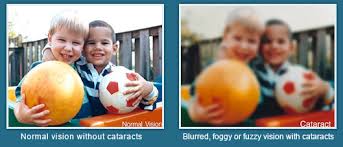 The Rochester Eye & Laser Team : Oct 25, 2021, 2:34:27 PM
The most common way to eliminate cataracts is to replace your clouded lens with a new artificial one called an intraocular lens, or an IOL.
 The Rochester Eye & Laser Team : Apr 1, 2020, 12:56:18 PM
Video: About cataracts, types of cataract surgery including bladeless cataract surgery, cataract surgery costs, and types of intraocular lens.
The Rochester Eye & Laser Team : Mar 3, 2022, 1:16:29 PM
Learn more about cataracts, the leading cause of vision impairment in the US, and bladeless surgery, plus intraocular lenses, or IOL.