 The Rochester Eye & Laser Team
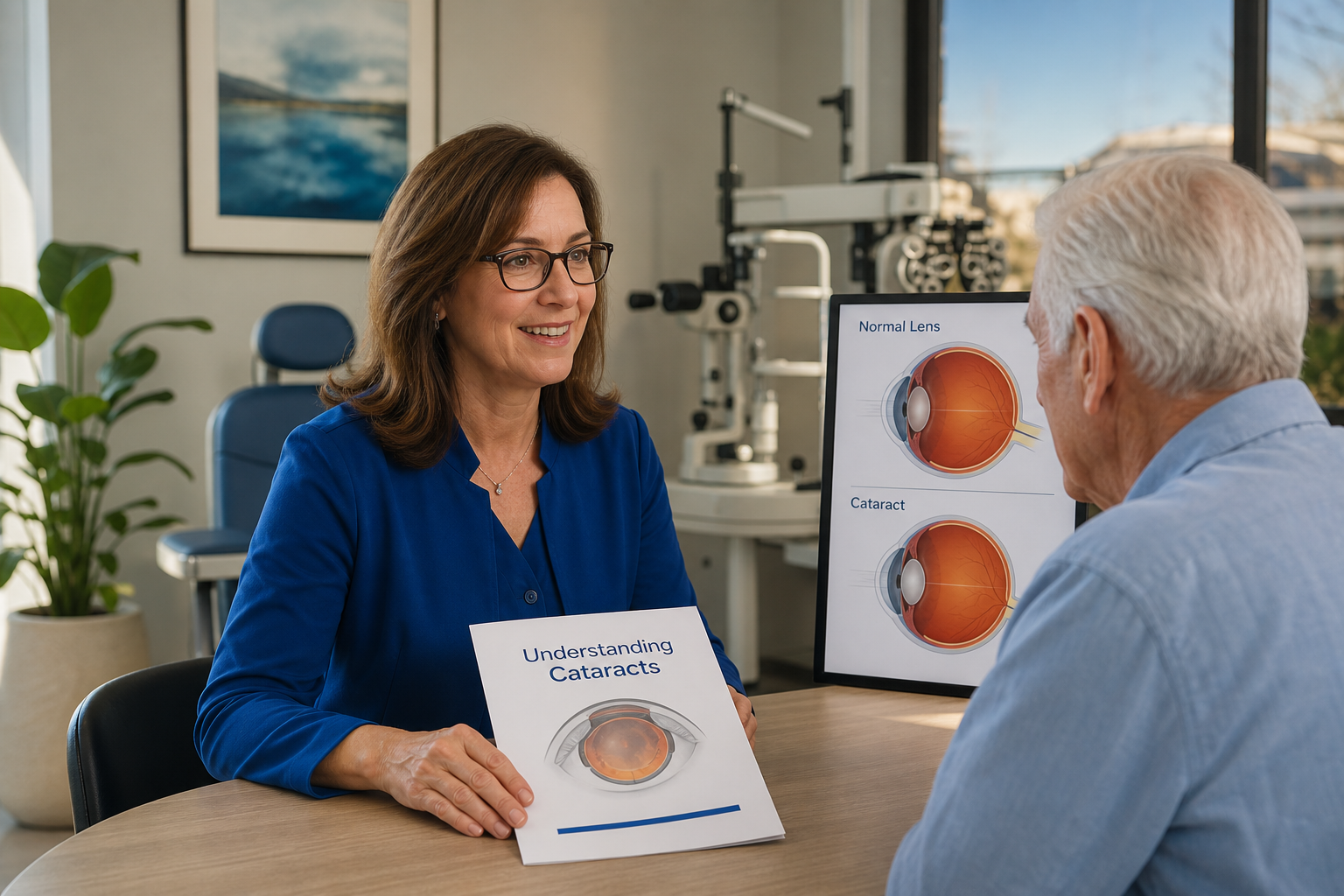
If you've been told you have a cataract, or you're just starting to notice your vision isn't quite what it used to be, you probably have questions. That's completely normal — and you're not alone. Cataracts are one of the most common eye conditions in adults over 60, and nearly everyone will develop one eventually if they live long enough.
Let's walk through what's actually happening, without the medical jargon.
So what is a cataract, exactly?
Inside your eye, right behind the iris (the colored part), there's a small, clear lens. Its job is to focus light onto the back of your eye so your brain can turn it into an image. Think of it like the lens of a camera.
Over time, the proteins in that lens can start to clump together, making it cloudy instead of clear. That cloudiness is a cataract. It doesn't happen overnight — it's a gradual process, which is often why people don't notice it right away. You might just assume you need a new glasses prescription, or that rooms have gotten dimmer than they used to be.
What does it actually feel like?
Every patient describes it a little differently, but common experiences include:
- Colors looking faded or yellowed
- Headlights and lamps seeming unusually glary at night
- Needing more light to read comfortably
- A general sense that things look "hazy" or "like looking through a foggy window"
None of these symptoms are dangerous or urgent on their own. But they're worth mentioning to your eye doctor, because they can affect your quality of life more than people expect — things like driving comfortably at night or reading the newspaper.
Why does this happen?
Age is the biggest factor, but a few other things can speed up the process: prolonged sun exposure, smoking, diabetes, certain medications (like long-term steroid use), and family history all play a role. It's not something you did wrong — it's simply part of how the eye ages for most people.
Do I need surgery right away?
Not necessarily. In the early stages, a lot of the day-to-day impact can be managed with an updated glasses prescription, brighter lighting, or anti-glare lenses. Surgery becomes worth considering when the cataract starts interfering with the things you want and need to do — reading, driving, working, enjoying time with family.
The good news is that cataract surgery is one of the most common and well-refined procedures in all of medicine. It's quick, it's outpatient, and the vast majority of patients see meaningfully clearer within days.
What should you do next?
If any of this sounds familiar, the best next step is simply a conversation. A comprehensive eye exam can tell us exactly what's going on and whether it's time to start talking about options — or whether we just keep an eye on things for now. There's no pressure, and there's no need to have it all figured out before you come in.
You don't have to live with cloudy vision, and you don't have to navigate this alone. We're here to help you see clearly again, one honest conversation at a time.
Download Simple Guide to Cataracts and Your Treatment Options.

 Danielle Kunkle
 The Rochester Eye & Laser Team