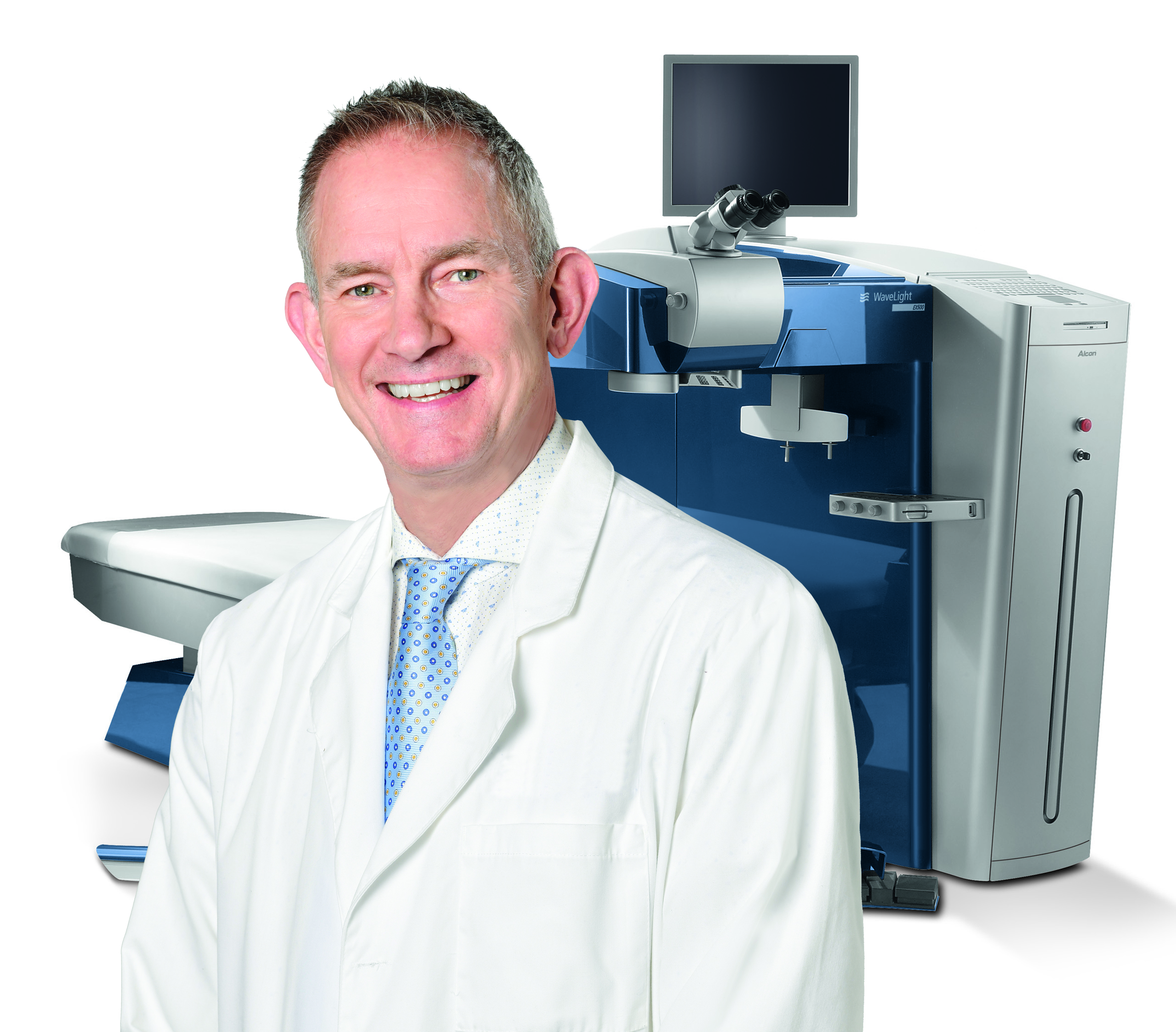
 The Rochester Eye & Laser Team

Note: The following story reflects experiences common among many of our patients. Details have been combined and changed to protect patient privacy.
Margaret didn't think much of it at first. She just figured her reading glasses needed an upgrade. Then she noticed she was turning on more lamps than usual in the evening. Then her daughter mentioned, gently, that maybe it wasn't the best idea to drive home after dark anymore.
"I kept explaining it away," Margaret says. "New glasses, bad lighting, tired eyes. It's easy to talk yourself out of thinking something's actually wrong."
It wasn't until she came in for a routine eye exam that she got an answer: cataracts, in both eyes, further along than she'd realized.
The moment it clicked
"I remember sitting there almost embarrassed, like — how did I not notice this was so much worse than I thought?" she recalls. "But it made sense. It happened so slowly. It's not like waking up one day and suddenly not being able to see. It creeps in."
That's actually one of the most common things we hear. Cataracts develop gradually, so the brain adjusts, bit by bit, without a person consciously registering the shift. It's only looking back — often after surgery — that patients realize just how much they'd been missing.
Making the decision
Margaret admits she was nervous about surgery. "I'd never had anything done to my eyes before. The idea of it made me squeamish, honestly."
What helped, she says, was simply having the process explained clearly, step by step, and knowing what to expect at each stage — from the pre-op appointment through the day of surgery to recovery. "Once I understood it was quick, that I'd be comfortable, and that people do this every single day, it felt a lot less scary."
Life on the other side
"The first thing I noticed was the colors," Margaret says. "I didn't realize how yellow everything had looked before. White actually looked white again. It sounds silly, but it almost made me want to cry."
She also talks about smaller, quieter changes — reading without holding the book at arm's length, recognizing faces across the restaurant, feeling confident driving at night again.
"I tell everyone now — don't wait as long as I did. I spent years thinking this was just 'getting older.' It wasn't. It was something that could be fixed, and I wish I'd asked sooner."
If Margaret's story sounds familiar
Maybe you've noticed some of the same things — colors that seem duller, halos around lights, needing more light than you used to. If so, you're not imagining it, and you're not alone. A simple conversation and an eye exam can tell you exactly where things stand, with zero obligation to do anything beyond that first step.
Download Simple Guide to Cataracts and Your Treatment Options.


 The Rochester Eye & Laser Team